
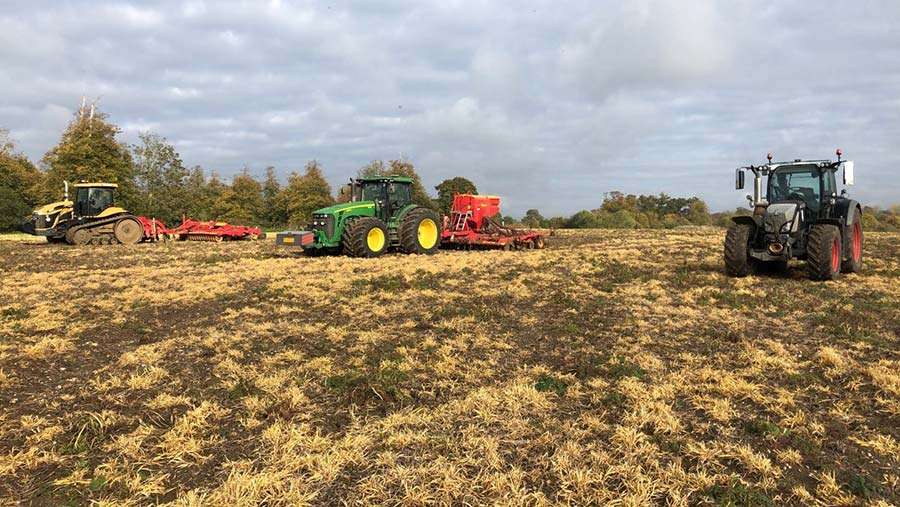
What is Overcultivation?
‘Overcultivation’ refers to soil damage as a result of land being used too intensively. It relates to how often the soil is worked, and whether it has time or nutrients to recover. Too much pressure on the land can reduce yields, weaken crops, and create long-term problems for soil health.
How it develops
Overcultivation usually builds up over time. Growing the same crop season after season removes the same nutrients from the soil. Skipping fallow periods or shortening rest times leaves the soil with no chance to recover. Intensive ploughing can break down soil structure, and continuously removing crops without replacing nutrients will gradually deplete fertility.
Even subtle changes make a difference. A field that seems productive year after year can rapidly decline if the soil health isn’t actively maintained.
The impact on soil and crops
The effects are wide ranging. Nutrients like nitrogen and phosphorus become scarce, which reduces crop growth and yields. Soil structure weakens, making it more vulnerable to erosion from wind or rain. Overworked soil also loses vital biological life, e.g., worms, microbes, and other organisms that help maintain fertility.
In extreme cases, overcultivation can lead to desertification, meaning the land becomes barren.
How to prevent overcultivation
Crop rotation is one of the simplest and most effective methods to prevent overcultivation. It allows the soil a chance to recover and maintain its natural fertility, as changing the type of crop grown each season balances nutrient use and interrupts pest cycles. Cover crops, green manures, or compost can restore nutrients and improve soil structure.
Another way to prevent overcultivation is reducing tillage. By minimising deep ploughing, the soil texture is preserved and organisms are kept healthy.
2 common scenarios where overcultivation occur are:
- Where soil is double worked, the finer tilth created in the overlap can give the impression of a good seedbed and there can be good initial establishment. On occasions, operators will double cultivate on the headland to leave a level seedbed and remove visible wheelings. However, the increased packing density results in high water retention and the crop can struggle in later months. The correct approach is to use appropriate wheels and tyres (advised by a wheel supplier like Brocks Wheel & Tyre) to reduce headland wheeling and remove the cost and damage, with the associated decrease in yield, from additional cultivation.
- Wheel tracks. Sometimes, operators use wheel track eradicators to remove the compaction form tractor wheels. This can result in over cultivations where the loosened soil lose structure and become more susceptible to compaction and decrease porosity in subsequent passes. Studies show that the benefit of wheel track eradication is minimal, with the best approach being to avoid compaction in the first place by appropriate wheel and tyre technology.
Key takeaways
A few practical points to remember:
- Rotate crops and allow fallow periods to let the soil recover.
- Replace nutrients through compost, manure, or green manures.
- Minimise intensive ploughing to protect soil structure and biological life.
- Use correct wheel and tyre equipment to remove the need for additional cultivation
Overcultivation isn’t just a soil issue—it affects farm productivity, profitability, and sustainability. By managing the land carefully and using these practices, farmers can protect soil today and ensure it remains productive for generations to come.
